
The views expressed in this article represent the opinions of the author and do not necessarily reflect the opinions of the Chattanooga Area Chamber of Commerce, its staff, or its board of directors.
Over the past several weeks, I stood in front of nearly 300 Tennessee teachers at three Institute of American Civics academies and asked them to do something simple. Open the state social studies standards and search for the word property. It appears twice in roughly 7,800 lines. Then I showed them that the idea behind that word, the right of a person to control their own labor, home, faith, and voice, runs through more than thirty of those same standards. We teach the founding all the time. We rarely name the economic idea at its center.

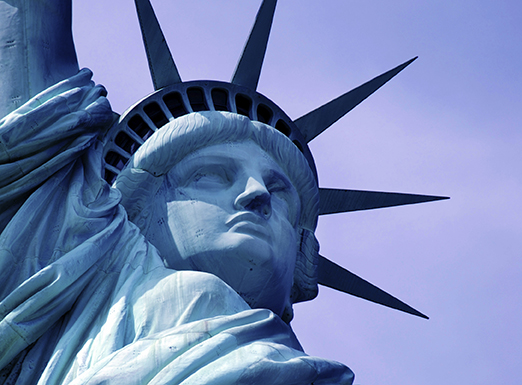
As the nation turns 250 this July and Chattanooga lights up the riverfront to mark it, that idea is worth naming. The founders did not separate politics from economics the way we often do. They read both. Adam Smith’s Wealth of Nations and Thomas Jefferson’s Declaration of Independence were published in the same year, 1776. The Constitution that followed was, in part, an economic document. Understanding what the founders built, and why it has worked, is the best birthday tribute we can offer.
The Idea at the Center
Start with the most familiar line in the Declaration. Life, liberty, and the pursuit of happiness. We read it as poetry. The founders meant it as a claim about ownership. The pursuit of happiness, in the tradition of John Locke that shaped Jefferson’s thinking, requires control over one’s own labor and resources. You cannot pursue anything if someone else owns the means by which you would pursue it. Self-ownership is the root, and property rights are how self-ownership is secured.
The grievances that drove the colonies to revolt were, at bottom, property cases. The Stamp Act, the Townshend Acts, the Tea Act. The rallying cry was taxation without consent, and that was a claim about property. The colonists were not arguing that taxes are always wrong. They were arguing that taking a person’s resources without their consent violates something fundamental about who owns what.
The Bill of Rights then wrote that principle into law, sometimes openly and sometimes by implication. The Third Amendment keeps soldiers out of your home. The Fourth bars unreasonable search and seizure. The Fifth guarantees that the government cannot take private property without due process and just compensation. These are property protections in plain sight. But the less obvious ones matter just as much. Freedom of speech, freedom of worship, and freedom of assembly all presuppose a private sphere in which a person is free to act. A right to speak means little without somewhere to stand. Property is what makes the other freedoms physically possible.
The Promise and Its Completion
The full story has one more turn, and it is the one that gives the founding its meaning. The principle was right, but it was not at first applied to everyone. The Emancipation Proclamation of 1863 restored self-ownership to enslaved people and framed freedom as an inherent right rather than a privilege the government grants. The Reconstruction Amendments then completed the work. The Thirteenth abolished slavery, the Fourteenth guaranteed due process and equal protection, and the Fifteenth secured voting rights regardless of race. The founders set down a principle the country then had to grow into. The promise of 1776 and the work of 1865 are not in tension. The second is the keeping of the first.
What the Evidence Shows
This is where an economist can add something to the civics lesson. The claim that property rights underpin human flourishing is not merely philosophical. It is measurable, and the measurements are striking. Using cross-country data such as the Fraser Institute’s Economic Freedom of the World index, which scores how well countries protect property, the patterns are consistent across decades and continents.
Countries that protect property rights have longer life expectancy. They are more likely to be democracies. They treat women more equally under the law. They have substantially higher income per person. These relationships are strong, and they hold across very different cultures and histories. My own published research supports each of these conclusions. The founders argued from principle because the data did not yet exist. Two and a half centuries later, the data have caught up to the principle, and they point the same direction.
Why It Works
The mechanism is not complicated, and Smith described it in the same year as the Declaration. When people own the fruits of their effort, they are motivated to produce, to improve, and to innovate, because the reward is tied to their own gain. Smith’s phrase was the human tendency to truck, barter, and exchange. Ownership aligns personal success with social prosperity. The farmer who owns his land and keeps his harvest works it harder, and everyone eats better as a result.
There is a deeper reason as well. Secure property rights are what allow prices to exist, and prices are how an economy coordinates itself. A price signals relative scarcity. It tells producers what to make and consumers what to conserve, without anyone issuing an order. Strip away private property and you strip away the price signals with it, which is why centrally controlled economies, the ones where the government owns the means of production, cannot calculate their way to prosperity. They are flying blind. This is not a slogan. It is the difference between a system that can coordinate the choices of millions of strangers and one that cannot.
The Lesson Worth Carrying
Here is the part most worth remembering as the country celebrates, and it speaks directly to a political moment in which many people feel a great deal of anxiety about who holds power. The founders’ deepest insight was that the question of who governs matters far less than the question of what governing they are permitted to do. James Madison and the framers designed a system to tie the hands of rulers, through limited government, separation of powers, and the rule of law. They did not assume that good people would always be elected. They assumed the opposite, and they built accordingly.
The economist Friedrich Hayek put the point sharply. The great merit of a system grounded in property rights and rule of law is that it is one under which bad or foolish rulers can do the least harm. It does not depend on finding good men to run it. It makes use of people as they actually are, sometimes wise and often not, and constrains the damage any of them can do. That is what the founders understood, and it is the most reassuring idea available to anyone worried about the state of our politics.
The takeaway is liberating. Do not spend all your energy on who wins the next election. Spend it on whether the rules that constrain power are holding. As long as the constraints hold, the property rights and the rule of law that protect every one of us, the republic does not rise or fall on any single occupant of any single office. The anxiety so many feel about the person in power is, in a sense, a sign that we have forgotten where our security actually comes from. It comes from the rules, not the rulers.
That is what I asked nearly 300 Tennessee teachers to carry back to their classrooms, and it is what the riverfront fireworks are really celebrating. Not a person, not a party, not even a particular outcome, but a set of rules that has secured human freedom for 250 years better than any alternative ever devised. Smith wrote that little else is required to carry a nation from poverty to prosperity but peace, easy taxes, and a tolerable administration of justice. The founders gave us the framework to provide all three. The best way to honor them at 250 is to understand what they built, to teach it, and to keep it.
Dr. Claudia Williamson Kramer is the Scott L. Probasco, Jr., Distinguished Chair of Free Enterprise, Professor of Economics, and Executive Director of the Center for Economic Education at UTC.